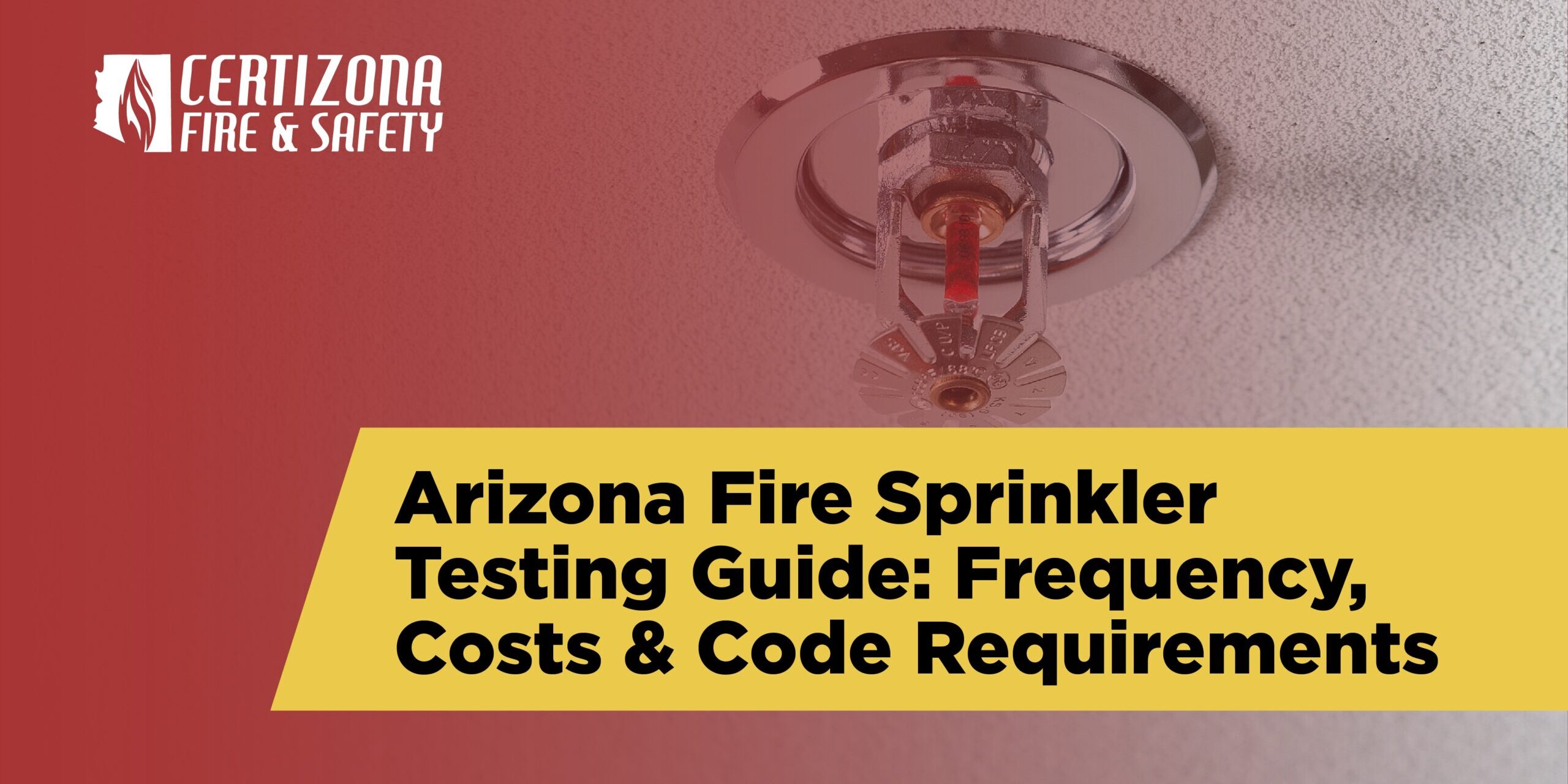
Arizona fire sprinkler testing follows strict rules that protect lives, property, and businesses across the state.
Systems must be inspected and tested on a set schedule to stay reliable and code-compliant.
Missing required testing can lead to fines, failed inspections, and higher risk during a fire.
Fire sprinklers often sit quietly for years, yet they must work instantly when heat rises.
According to data from NFPA, buildings with properly maintained sprinkler systems experience far lower fire loss rates than those without active systems.
In Arizona, testing rules exist to ensure systems respond correctly during real emergencies.
This guide explains how fire sprinkler testing works in Arizona, how often it is required, what it costs, and which codes apply.
It also explains why regular testing supports fire safety compliance.
Why Does Arizona Fire Sprinkler Testing Matter?
Fire sprinkler systems are life safety systems, not optional equipment.
They control fires early, limit smoke spread, and protect escape routes.
When sprinklers fail, fire damage spreads fast.
Regular testing ensures valves open, water flows, and alarms trigger as designed.
Arizona requires testing to support fire code adherence at the state and local level.
Inspectors rely on test records to confirm systems will operate during an emergency.
How Often Is Fire Sprinkler Testing Required?
Testing frequency guidelines depend on system type, building use, and component function.
Some checks occur monthly, while others happen quarterly or annually.
Skipping even one test cycle can create serious compliance gaps.
Small issues like stuck valves or blocked gauges often appear during routine testing.
These schedules help identify wear before it becomes a system failure.
Consistent testing also supports sprinkler system maintenance planning.
Arizona Fire Sprinkler Testing Requirements
Arizona follows adopted fire codes that reference national testing standards.
These rules apply to commercial, industrial, and many residential buildings.
Testing confirms water pressure, valve position, alarm signaling, and system integrity.
Inspectors document results and identify corrective actions if needed.
State guidance on fire protection systems appears within the AZ State Statute and Fire Code.
Local jurisdictions may add stricter requirements.
Local Authority Oversight
Local fire marshals enforce testing schedules and review inspection reports.
They may request documentation during routine fire inspections.
Buildings without proper records may fail inspection even if the system appears functional.
Paperwork matters as much as physical performance.
Fire Code Compliance Versus National Standards
Arizona fire code adoption aligns closely with national safety standards.
These standards define how testing should be performed and documented.
Understanding how local rules compare to national guidance helps owners avoid confusion.
A clear breakdown appears in this overview of the Arizona fire code versus NFPA standards.
Fire safety compliance depends on meeting both local and national expectations.
What Is Included In Fire Sprinkler Testing?
Testing examines key system components that affect fire response.
This includes valves, water flow devices, pressure gauges, and alarms.
Technicians verify that systems activate correctly and communicate with alarms.
Any irregular readings are noted for correction.
Routine testing also supports long-term sprinkler system maintenance by identifying early signs of corrosion or obstruction.
Supporting Fire Protection Equipment
Sprinkler systems work alongside hoses, alarms, and water supply systems.
All components must function together.
Fire hoses also require routine checks to remain effective during suppression.
The importance of this coordination is explained in why regular fire hose inspection and testing is crucial.
What Do Fire Sprinkler Inspections Cost In Arizona?
Sprinkler inspection costs vary by system size, building type, and testing scope.
Larger systems require more time and documentation.
Annual testing typically costs less than emergency repairs after a failed inspection.
Preventive testing reduces unexpected expenses.
Testing costs are predictable. Fire damage costs are not.
Consequences Of Skipping Required Testing
Missing required testing increases risk during a fire event. Systems may fail to activate when heat rises.
Property owners may face fines, failed inspections, or insurance issues.
Some insurers require proof of fire code adherence for coverage.
Consistent testing protects both people and assets.
Frequently Asked Questions
Who Can Perform Fire Sprinkler Testing In Arizona?
Fire sprinkler testing must be completed by trained professionals who understand system design, pressure behavior, and safety protocols.
Arizona jurisdictions typically expect testing to be done by certified technicians who follow approved inspection procedures.
Using unqualified personnel can lead to inaccurate results or unsafe conditions.
Improper testing may also cause reports to be rejected during official inspections.
Does Fire Sprinkler Testing Require Shutting Down The System?
Most testing does not require a full system shutdown.
Many procedures are designed to verify performance while keeping fire protection active.
Some tests may briefly affect alarms or water flow, which is why planning and communication matter.
Proper scheduling helps reduce disruption while maintaining safety coverage.
What Documentation Is Provided After Testing?
After testing, property owners receive written records that show which components were tested, the results, and whether corrective action is needed.
These records serve as proof of compliance.
How Do Seasonal Conditions Affect Sprinkler Testing?
Arizona heat can place stress on pipes, valves, and seals over time.
High temperatures may accelerate wear, especially in older systems or outdoor components.
Testing helps catch heat-related issues early.
This prevents failures caused by expansion, pressure changes, or material fatigue.
Are Fire Sprinkler Tests Different For Industrial Buildings?
Industrial systems often require more detailed testing due to higher water demand and specialized layouts.
These systems may support large open spaces or hazardous materials.
Because of this complexity, inspections often take longer and involve additional performance checks.
The goal is to ensure the system can respond under heavy fire conditions.
What Happens If A Building Changes Use Or Occupancy?
Changes in building use can affect fire safety requirements.
A space converted from storage to public use may need different testing considerations.
Testing helps confirm the system still matches current risks.
Updated inspections reduce liability after renovations or occupancy changes.
Reliable Fire Protection Support In Arizona
Experience matters when safety systems are on the line.
Certizona Fire & Safety brings decades of hands-on experience, certified technicians, and mobile service across Arizona.
Their team supports full fire protection systems, from sprinklers and alarms to extinguishers and special hazard equipment.
This integrated approach helps properties stay compliant without juggling multiple vendors.
If you need dependable Arizona fire sprinkler testing and clear documentation that supports inspections and insurance needs, request a quote to get started.
Reliable Fire Sprinkler Repair in Scottsdale AZ
Turn to Certizona Fire & Safety for professional fire sprinkler repair services that keep your property protected and compliant. Our certified team delivers expert inspections, maintenance, and repairs to ensure your fire sprinkler system operates properly when it matters most.
Call (623) 227-2092 or request an online quote today!

Backed by 30+ years of experience, Certizona Fire & Safety helps Arizona businesses and homeowners stay protected with certified fire protection inspection, testing, and repair services. Our team is known for reliable service, competitive pricing, and a strong commitment to safety. Request a quote today to keep your property protected and compliant.